

A Scientific Insight into Purity, Immunity, and Sugar Substitution
1. Origin and Purity
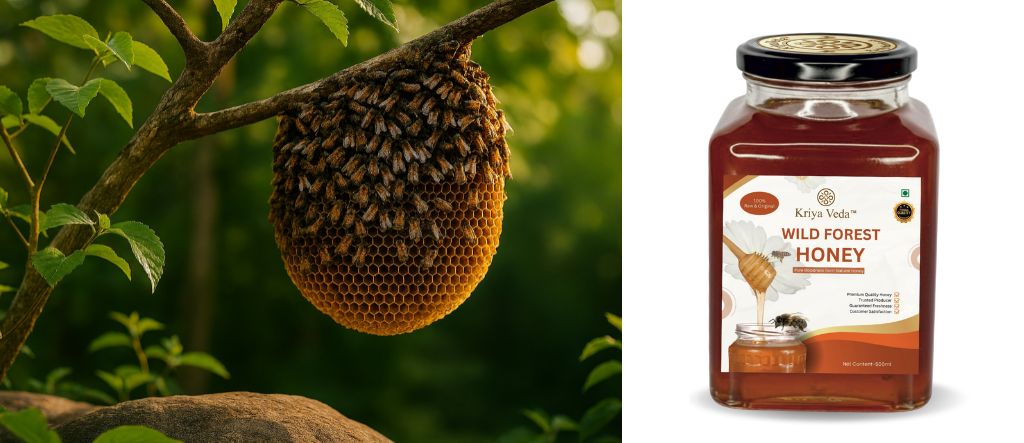
Kriya Veda Wild Forest Honey is sourced from bees that forage freely in forest ecosystems rich in wildflowers, medicinal herbs, shrubs, and native trees. Unlike commercial honey, these bees are not fed sugar syrups and are minimally interfered with, resulting in honey that reflects natural floral diversity.
Purity in honey is scientifically verified through parameters such as pollen diversity, enzymatic activity (diastase), low hydroxymethylfurfural (HMF) levels, and advanced tests like isotope ratio analysis and NMR profiling. Raw, unheated honey maintains natural enzymes and shows gradual crystallization over time -a normal physical behavior linked to glucose content and a strong indicator of minimal processing and absence of adulteration.
2. Raw Consistency as a Marker of Authenticity
Raw forest honey typically has:
•Natural viscosity and slow flow
•Complex aroma from diverse nectar sources
•Gradual crystallization rather than permanent liquidity
•Presence of pollen and enzymes
While visual traits suggest purity, laboratory authentication remains the gold standard for confirming absence of added sugars or syrups.
3. Nutritional and Bioactive Composition
Wild forest honey contains:
•Natural sugars (fructose and glucose)
•Enzymes such as glucose oxidase and invertase
•Organic acids (mainly gluconic acid)
•Polyphenols and flavonoids with antioxidant properties
•Trace minerals, amino acids, and pollen-derived compounds
This complex matrix differentiates raw honey from refined sweeteners.
4. Immune-Boosting and Antimicrobial Mechanisms
Honey supports immune health through multiple mechanisms:
•Low pH and high osmolarity inhibit microbial growth
•Hydrogen peroxide production provides antimicrobial action
•Polyphenols and flavonoids reduce oxidative stress and inflammation
•Supports gut health, indirectly strengthening immune response
Clinical and experimental studies support honey’s role in antimicrobial defense and immune modulation, particularly when consumed raw and unprocessed.
5. Honey vs. Refined Sugar
Refined sugar (sucrose) provides empty calories and causes rapid blood glucose spikes. In contrast:
•Honey has a lower and variable glycemic index
•Provides antioxidants and bioactive compounds
•Requires smaller quantities due to higher sweetness intensity
When used mindfully, honey is a nutritionally superior alternative to refined sugar.
6. Harmful Effects of Excess Sugar
Chronic intake of refined sugar contributes to:
•Insulin resistance and type 2 diabetes
•Fatty liver disease
•Cardiovascular dysfunction
•Chronic inflammation
•Dental caries and gut microbiome imbalance
Replacing refined sugar with raw honey can reduce metabolic burden when overall sugar intake is controlled.