

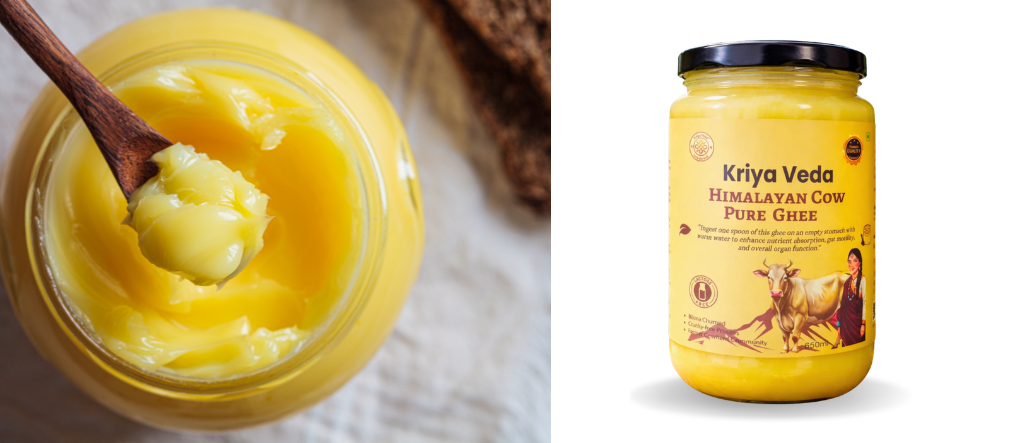
A Scientific & Traditional Perspective on Purity, Nutrition and Bone Health
1. Origin and Procurement
Kriya Veda Himalayan Cow Pure Ghee is prepared from milk obtained from cows naturally reared in the Himalayan region. These cows graze freely on mountain grasses, seasonal herbs, and mineral-rich pastures, without intensive confinement or high-grain feeding. Such pasture-based nutrition directly influences milk fat quality by enhancing beneficial fatty acids and fat-soluble vitamins.
The ghee is traditionally produced using the bilona method, where whole milk is cultured into curd, hand-churned to extract butter, and slowly clarified at controlled temperatures. This process preserves bioactive lipids and removes lactose and milk proteins, resulting in a highly digestible, stable fat.
2. Nutritional and Biochemical Composition
Himalayan cow ghee is composed primarily of:
•Saturated and monounsaturated fatty acids (including stearic and oleic acid)
•Butyric acid, a short-chain fatty acid essential for gut lining integrity
•Conjugated Linoleic Acid (CLA), known for anti-inflammatory and metabolic roles
•Fat-soluble vitamins A, D, E, and K
•Minimal lactose and casein due to clarification
Pasture feeding and low-heat processing improve nutrient density compared to industrial ghee production.
3. Digestive and Metabolic Health
Butyric acid in ghee supports intestinal epithelial cells, enhances gut barrier function, and modulates immune responses in the gut. This makes ghee beneficial in supporting digestive health and reducing low-grade intestinal inflammation. Its stable fat structure also aids in bile secretion and fat digestion.
4. Vitamin K2 and Bone Strength
Himalayan cow ghee is a natural dietary source of vitamin K2 (menaquinones), synthesized by rumen microbes and enriched in grass-fed ruminant fat. Vitamin K2 activates osteocalcin, a protein responsible for binding calcium into the bone matrix, thereby strengthening bones and preventing abnormal calcium deposition in soft tissues. When combined with vitamin D and dietary calcium, K2 plays a critical role in skeletal health.
5. Overall Health Benefits
•Enhances absorption of fat-soluble nutrients
•Supports gut health and immune balance
•Contributes to bone mineralization via vitamin K2
•Provides stable cooking fat with high oxidative resistance
•Suitable for individuals with lactose intolerance
6. Responsible Consumption
Despite its benefits, ghee is energy-dense and rich in saturated fats. Moderate intake as part of a balanced diet is recommended, especially for individuals with lipid disorders. Its therapeutic value depends on quality, quantity, and dietary context.