

1. Gut inflammation and increased intestinal permeability, commonly referred to as Leaky Gut Syndrome, have emerged as central contributors to multiple chronic diseases, including autoimmune disorders, metabolic syndrome, mental health conditions, and hormonal imbalances. Modern science recognizes the gut as a critical immunological and neuroendocrine organ, while traditional systems such as Ayurveda have long emphasized digestive strength (Agni) as the foundation of health. This article explores the pathophysiology, causes, and systemic consequences of gut inflammation from both scientific and traditional viewpoints, and discusses integrative approaches for gut healing.
The gastrointestinal tract is not merely a digestive organ but a complex system influencing immunity, metabolism, brain function, and hormonal regulation. In recent decades, rising cases of chronic inflammation, food intolerances, irritable bowel syndrome (IBS), autoimmune diseases, and mental health disorders have drawn attention to gut barrier dysfunction. Traditional medicine systems recognized these disturbances thousands of years ago, describing them as impaired digestion, toxin accumulation, and systemic imbalance.
2. Scientific Understanding of Gut Inflammation & Leaky Gut.
2.1 Intestinal Barrier Structure
The intestinal lining consists of:
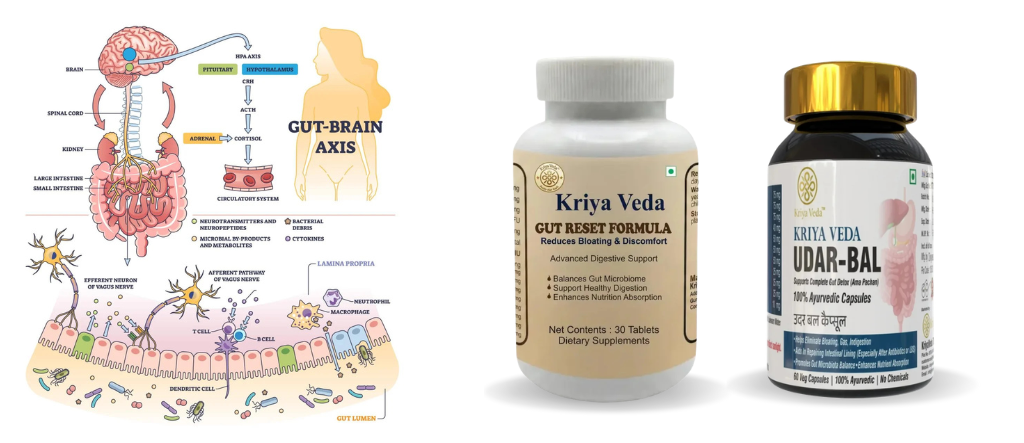
1. The Nervous Connection: The Vagus Nerve “Superhighway”
The diagram highlights the Vagus Nerve as a critical physical link. This nerve acts like a two-way fiber-optic cable:
* Afferent Pathway: Sensory neurons in the gut lining (shown in the bottom panel) detect chemical and mechanical changes. They send real-time data up to the brain about what you’ve eaten and the state of your microbiome.
* Efferent Pathway: The brain sends signals back down to regulate gut motility, secretion of digestive enzymes, and even the “tightness” of the intestinal barrier. This is why you feel “butterflies” in your stomach when you’re nervous—your brain is physically altering your gut’s environment.
2. The Hormonal Connection: The HPA Axis and Stress
The image details the HPA Axis (Hypothalamic-Pituitary-Adrenal Axis), which is the body’s primary stress response system.
* When the brain perceives stress, the Hypothalamus releases CRH, triggering the Pituitary gland to release ACTH.
* This signals the Adrenal glands (sitting atop the kidneys) to flood the circulatory system with Cortisol.
* High cortisol levels can increase “gut permeability” (leaky gut), allowing bacterial debris to escape the gut and trigger inflammation, which further impacts mood and cognitive function.
3. The Immune and Chemical Dialogue
The bottom half of the image provides a microscopic look at the Gut Lumen and the Lamina Propria. Here, the connection becomes chemical:
* Neurotransmitters: Gut bacteria produce a vast array of chemicals, including serotonin and dopamine. While these often stay in the gut, they influence the local nerves that signal the brain.
* The Microbiome: The various bacteria shown (the green and blue rods) produce metabolites and by-products (like short-chain fatty acids) that can enter the bloodstream.
* Immune Activity: When the gut barrier is compromised, immune cells like T Cells, B Cells, Macrophages, and Neutrophils release Cytokines (inflammatory signaling molecules). These cytokines can travel through the blood, cross the blood-brain barrier, and influence brain health, potentially contributing to brain fog, anxiety, or depression.